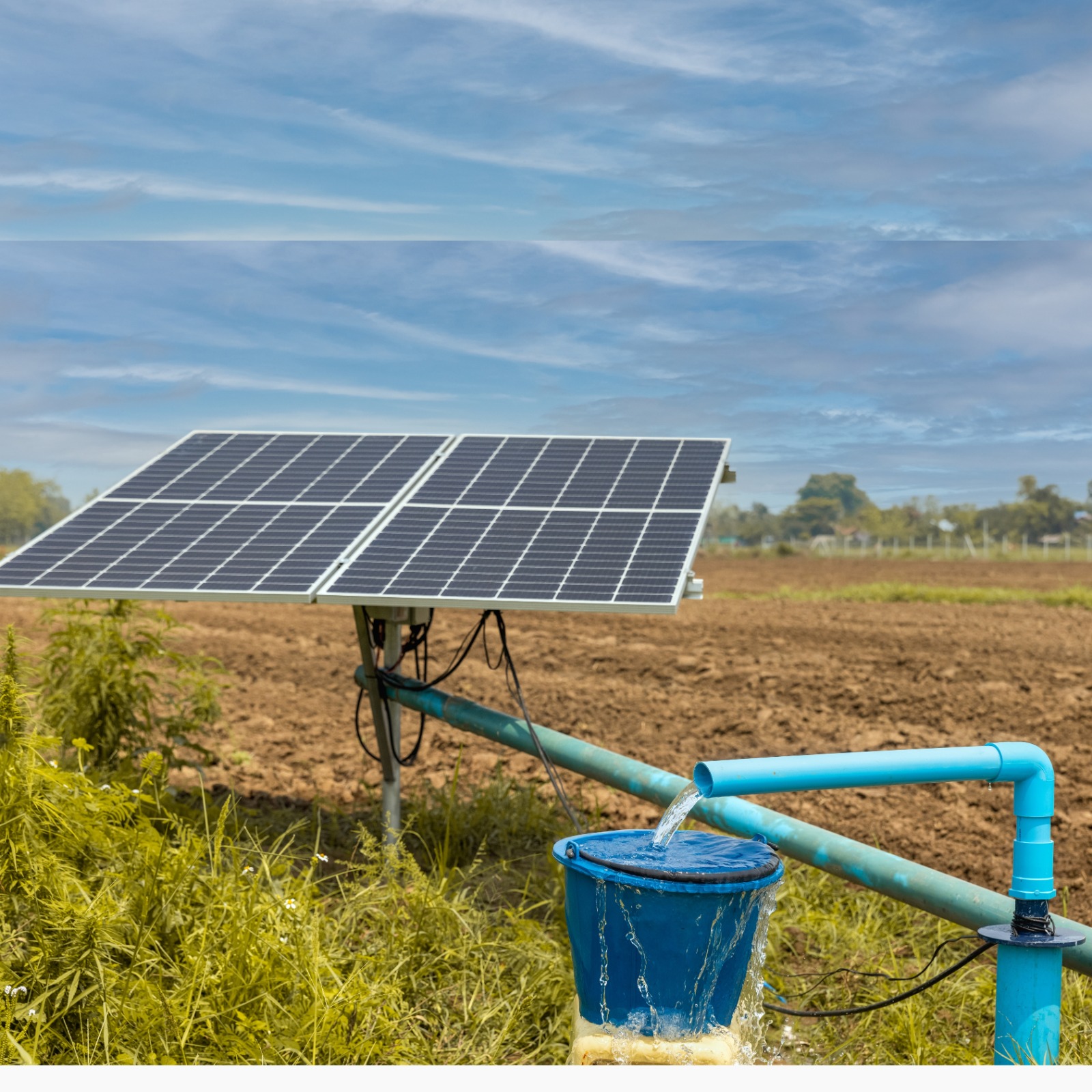
Solar Water Pump – Jay Balaji Associates
Agriculture and water management require a reliable and cost-effective water supply. A solar water pump uses electricity generated by solar panels to pump water for agricultural irrigation, livestock, and other suitable applications. Jay Balaji Associates provides solar water pump solutions designed to meet different water pumping requirements while helping reduce dependence on conventional electricity sources.
Whether you need a solar pump for agricultural land, irrigation, a farmhouse, or a location with limited grid connectivity, our team can help you explore a suitable system based on water demand, pumping depth, and site conditions.
What Is a Solar Water Pump?
A solar water pump is a water pumping system powered by solar energy. Solar panels generate electricity that operates the pump motor, allowing water to be drawn from suitable sources such as wells, borewells, or storage reservoirs.
Solar pumping systems can be used for irrigation, livestock watering, and other water supply requirements. The appropriate pump depends on the water source, required flow rate, total pumping head, daily water demand, and available sunlight.
Benefits of Solar Water Pumps
1. Reduce Electricity Expenses
Solar water pumps use sunlight to generate the electricity needed for pumping. This can reduce dependence on grid electricity or conventional fuel-powered pumps, depending on the application.
2. Reliable Water Supply for Irrigation
A properly sized solar pumping system can help farmers supply water to their fields during suitable sunlight hours. Water storage can also be considered to support irrigation requirements when the pump is not operating.
3. Suitable for Remote Agricultural Areas
Solar water pumps can be useful in agricultural locations where grid electricity is limited, unreliable, or unavailable, provided the site receives adequate sunlight and has a suitable water source.
4. Environmentally Friendly Operation
Solar energy is renewable and can help reduce emissions associated with conventional fuel-powered pumping systems.
5. Low Routine Operating Requirements
Solar pumps generally require less routine fuel-related maintenance than diesel pumps. Periodic inspection of panels, wiring, pump components, and the water source helps maintain reliable performance.
Solar Water Pump Solutions for Different Applications
Jay Balaji Associates helps customers explore solar pumping solutions for different water supply and agricultural requirements.
Agricultural Solar Water Pumps
Farmers can use solar water pumps to supply water to crops and support irrigation activities. Pump selection should account for field size, crop water requirements, water source depth, and the required daily pumping volume.
Solar Pumps for Farmhouses and Rural Properties
Solar-powered pumping systems can help supply water to farmhouses and rural properties where conventional electricity access may be limited. The system should be designed according to the water source and the required pumping capacity.
For properties that also need independent electricity generation, explore our off-grid solar solutions.
Solar Water Pumps for Commercial and Industrial Applications
Certain commercial and industrial facilities may use solar-powered pumps for suitable water transfer and supply requirements. The recommended system depends on water demand, operating hours, pump specifications, and site feasibility.
Explore our industrial solar power solutions for larger commercial and industrial energy requirements.
Our Solar Water Pump Installation Process
Step 1: Water Requirement Assessment
We assess your daily water requirements, intended application, and expected pumping schedule to understand the project's needs.
Step 2: Water Source Evaluation
The water source, depth, required delivery height, and distance to the delivery point are considered when selecting an appropriate pumping system.
Step 3: Solar Pump System Selection
The pump capacity, solar panel configuration, controller, and associated components are selected according to the required water flow and pumping head.
Step 4: Installation and Setup
Solar panels and pumping equipment are installed according to the approved design, site conditions, and applicable electrical and safety requirements.
Step 5: Testing and Commissioning
The system is checked to verify pump operation, water flow, electrical connections, and overall performance under suitable operating conditions.
Step 6: Maintenance and Inspection
Periodic inspection of solar panels, pump components, wiring, and water delivery performance can help identify issues and maintain system efficiency.
For ongoing solar system care, explore our solar maintenance services.
Why Choose Jay Balaji Associates for Solar Water Pumps?
Choosing a suitable solar water pump provider is important for matching the system to your water requirements and site conditions. Jay Balaji Associates helps customers explore solar energy products for agricultural and other suitable applications.
Our approach focuses on:
- Understanding daily water requirements
- Assessing the water source and pumping conditions
- Selecting a suitable pump and solar configuration
- Planning installation according to site requirements
- Providing installation guidance and technical support
- Recommending routine inspection and maintenance
Our goal is to help customers explore practical solar pumping solutions that support efficient water management.
Solar Water Pump Cost and Selection
The cost of a solar water pump depends on pump capacity, solar panel wattage, pumping depth, required water flow, mounting arrangements, installation requirements, and the type of pump selected.
Before purchasing a system, consider the water source, daily water demand, crop irrigation requirements, delivery height, and available sunlight. These factors help determine the suitable pump capacity and expected performance.
Government subsidies or financial assistance may be available for eligible agricultural solar pumping projects under applicable schemes. Availability and eligibility should be verified with the relevant authorities.
Get Started with Solar Water Pump Solutions
Looking for a suitable solar water pump for your agricultural land, farmhouse, or water supply application? Jay Balaji Associates can help you explore available solar pumping options based on your requirements.
A proper assessment of your water source, pumping depth, and daily water demand can help identify an appropriate solution for your property.
Explore our solar products and energy solutions to learn more about the options available.
Frequently Asked Questions About Solar Water Pumps
1. What is a solar water pump?
A solar water pump uses electricity generated by solar panels to pump water for irrigation, livestock, and other suitable applications.
2. Can a solar water pump be used for agriculture?
Yes. Solar water pumps can be used for crop irrigation, provided the pump capacity and water source meet the farm's requirements.
3. Does a solar water pump require a battery?
Many solar water pumping systems operate directly from solar panels and do not require batteries. Battery storage may be considered where the application requires it.
4. Can a solar water pump operate on cloudy days?
Pump performance may decrease when sunlight is limited. Actual operation depends on sunlight intensity, panel capacity, pump specifications, and the system configuration.
5. How do I choose the right solar water pump?
Consider the water source, pumping depth, required water flow, delivery height, daily water demand, and available sunlight before selecting a pump.
6. How can I maintain a solar water pump?
Keep the solar panels appropriately clean, inspect electrical connections and pump components, and check water flow periodically to help maintain system performance.


