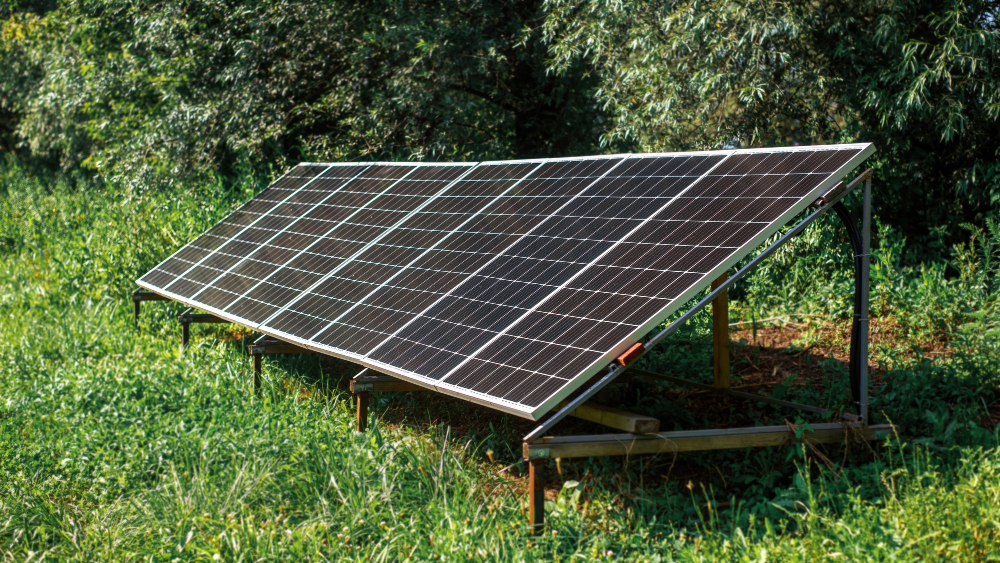
Access to reliable electricity is essential for homes, farms, businesses, and industrial facilities. Off grid solar solutions provide an alternative way to generate electricity using sunlight without depending on a continuous connection to the utility grid. Jay Balaji Associates offers customized solar power solutions designed to meet different energy requirements and support reliable electricity generation.
Whether you need solar power for a remote property, agricultural application, farmhouse, or location with limited grid access, our team can help you explore a suitable off-grid solar system based on your electricity consumption, available installation space, and backup requirements.
What Are Off Grid Solar Solutions?
An off-grid solar system is a solar power setup that operates independently of the utility electricity grid. It generally consists of solar panels, an inverter, a battery storage system, mounting structures, and associated electrical components.
During daylight hours, solar panels generate electricity from sunlight. The generated power can supply connected electrical loads and charge the batteries. Stored energy can then be used when sunlight is insufficient or unavailable, depending on battery capacity and system configuration.
At Jay Balaji Associates, we help customers evaluate their energy requirements and explore suitable off-grid solar solutions for their properties.
Benefits of Off Grid Solar Systems
1. Independent Power Generation
Off-grid solar systems generate electricity independently of the utility grid, making them suitable for locations where grid connectivity is unavailable, unreliable, or difficult to obtain.
2. Battery Backup for Electricity Needs
Battery storage allows excess solar energy to be stored for later use. This can help power selected appliances and electrical equipment when solar generation is low, depending on the battery capacity and connected load.
3. Suitable for Remote Locations
Farmhouses, rural properties, remote buildings, and other locations with limited grid access may benefit from an appropriately designed off-grid solar installation.
4. Renewable and Clean Energy
Solar energy is renewable and can help reduce dependence on conventional electricity sources while supporting more sustainable energy use.
5. Customized Power Solutions
Off-grid systems can be designed around specific electricity requirements, including lighting, fans, selected appliances, agricultural equipment, and other compatible loads.
Off Grid Solar Solutions for Different Applications
Jay Balaji Associates helps customers explore solar installations according to their power requirements, site conditions, and backup needs.
Residential Off Grid Solar Systems
Off-grid solar systems can supply electricity to homes in remote or rural locations where grid access is limited. A properly sized system can support essential appliances such as lights, fans, and other compatible household equipment.
Agricultural Off Grid Solar Systems
Agricultural properties may use off-grid solar power for selected electrical loads where grid connectivity is limited. The system capacity and battery storage should be designed according to the equipment's power consumption and operating schedule.
For agricultural pumping requirements, explore our Solar Water Pump solutions in Bareilly, if applicable to your project.
Commercial and Industrial Off Grid Solar Systems
Certain commercial and industrial locations require independent electricity generation or backup arrangements. An off-grid system can be considered after assessing the site's energy demand, required operating hours, battery storage, and equipment specifications.
For larger project requirements, explore our industrial solar power solutions.
Our Off Grid Solar Installation Process
Step 1: Electricity Requirement Assessment
We assess your electricity consumption, connected appliances, operating hours, and backup requirements to understand your energy needs.
Step 2: Site Survey
The installation location is evaluated for available space, sunlight exposure, shading, mounting requirements, and electrical infrastructure.
Step 3: System Design and Quotation
The recommended solar panel capacity, inverter specifications, and battery storage are selected according to the estimated energy demand and required backup duration.
Step 4: Solar Panel and Battery Installation
The solar panels, inverter, battery bank, mounting structures, and associated electrical components are installed according to the approved design and applicable safety requirements.
Step 5: Testing and Commissioning
The completed system is checked to verify its operation, charging performance, battery configuration, and compatibility with the connected electrical loads.
Step 6: Maintenance and Performance Monitoring
Regular inspections, battery checks, inverter monitoring, and appropriate solar panel cleaning can help maintain system performance and identify potential issues.
For ongoing care, explore our solar system maintenance services.
Why Choose Jay Balaji Associates for Off Grid Solar Solutions?
Choosing the right solar provider is important for designing a system that meets your electricity and backup requirements. Jay Balaji Associates helps customers explore solar solutions according to their property conditions and energy needs.
Our approach focuses on:
- Customized solar system planning
- Assessment of electricity consumption and backup needs
- Suitable solar panel, inverter, and battery selection
- Site assessment and installation feasibility
- Installation and commissioning support
- Maintenance guidance for long-term performance
We aim to help customers make informed decisions about adopting off-grid solar energy for residential, agricultural, commercial, and other suitable applications.
Off Grid Solar System Cost and Battery Requirements
The cost of an off-grid solar system depends on its capacity, solar panel specifications, inverter type, battery technology, storage capacity, mounting structure, and installation requirements.
Battery capacity is particularly important because it determines how much electricity can be stored for use when solar generation is insufficient. The appropriate configuration depends on daily energy consumption, required backup hours, connected appliances, and expected sunlight availability.
Before selecting a system, consider your electricity requirements, available installation space, and budget. A professional assessment can help determine an appropriate system size and estimated project cost.
Get Started with Off Grid Solar Solutions
Looking for dependable off grid solar solutions for your home, farmhouse, agricultural property, or business? Jay Balaji Associates can help you evaluate your electricity needs and explore a customized solar power system.
Our team focuses on understanding your site conditions, backup requirements, and energy consumption to help you choose a suitable off-grid solar configuration.
Frequently Asked Questions About Off Grid Solar
1. What is an off-grid solar system?
An off-grid solar system generates electricity independently of the utility grid. It generally uses solar panels, an inverter, and batteries to supply electricity according to the system's capacity.
2. Does an off-grid solar system require batteries?
Most off-grid solar systems require battery storage to provide electricity when sunlight is unavailable or insufficient. The required storage capacity depends on energy consumption and backup needs.
3. Can an off-grid solar system run during the night?
Yes. A suitably designed system can use electricity stored in its batteries during the night, subject to available battery capacity and connected loads.
4. Is off-grid solar suitable for homes and farmhouses?
Yes. Off-grid solar may be suitable for homes, farmhouses, and remote properties where grid connectivity is unavailable or where independent power generation is required.
5. How much does an off-grid solar system cost?
The cost depends on system capacity, battery storage, inverter specifications, installation requirements, and the types of electrical loads being supported.
6. How can I choose the right off-grid solar system?
Consider your daily electricity consumption, backup duration, connected appliances, available sunlight, battery requirements, and budget before selecting a system.